
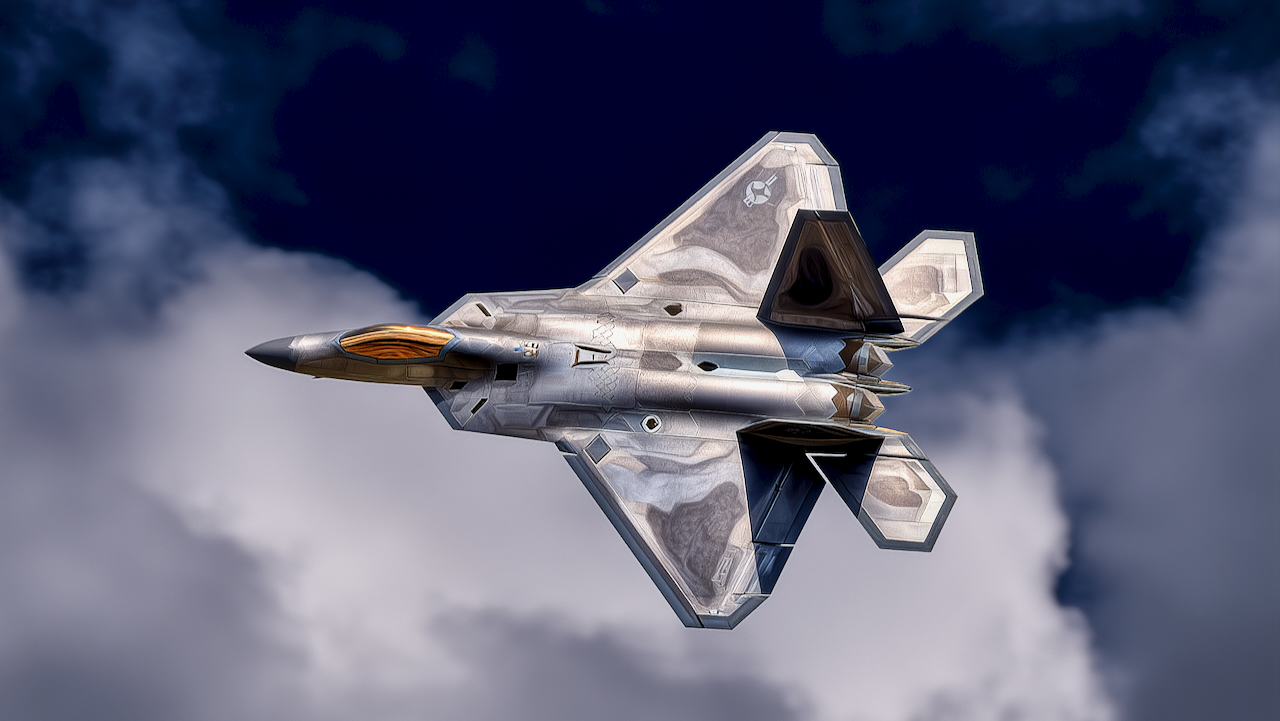
Since February 28, the United States and Israel have pounded more than 3,000 targets inside Iran. The figures are significant, regardless of the perspective from which they are considered. Iran’s navy has been sunk. Its air force and air-defense network are basically wiped out. Supreme Leader Ali Khamenei was killed on the very first day, along with a handful of senior IRGC commanders. Thousands of command centers, missile launchers, drone factories, airports, oil depots, and military plants have been turned to rubble. More than 300 launchers, 150 missiles, and 200 air-defense systems — gone.
By all military standards, Operation Epic Fury has achieved great results. However, what people in Washington aren’t acknowledging is that destroying equipment and targeting leaders doesn’t necessarily mean the government will fall. It’s this difference that makes the whole situation complicated.
What Trump Actually Wants
Trump has been crystal clear on one point: Iran is never getting a nuclear weapon. He’s said it for years. Sanctions, deals, and threats never stopped the regime from quietly pushing enrichment toward weapons-grade levels, some of it buried deep underground. Their own foreign minister basically admitted it during the nuclear negotiations. So, the strikes make sense. The regime was on a path toward a bomb, and the U.S. and Israel decided to take that path off the table.
Trump told Time he has “no time limits on anything.” Maybe. But there’s a big difference between tough talk and what Washington can stomach politically. Congressional Democrats are already voicing their concern. The American public, still carrying the scars from Iraq and Afghanistan, has zero appetite for another long war in the Middle East. Once the nuclear sites, missile force, and drone program are confirmed destroyed, and the military objectives achieved, the pressure to declare victory and go home is going to be enormous.
And that’s the cold reality. From Washington’s standpoint, the problem was more about Iran’s weapons than the mullahs. Once those weapons are gone, the U.S. and Israel will almost certainly stop. The regime’s brutality and the suffering of 90 million Iranians were never the main mission. The assumption is straightforward: if Iran moves to rebuild over the next ten to fifteen years, we can just hit them again. Knowing our technological superiority will guarantee another success.
Neither Trump nor Netanyahu has actually promised regime change. They’ve cheered the idea, sure. Trump called on the Iranian people to rise up. Netanyahu told them to “join forces.” The message, stripped down, is brutal: we smashed their toys. Now it’s your problem.
The Problem With “Now It’s Your Turn”
This is where the hopeful scenario runs into a brick wall. The dream is that the regime is so weakened that ordinary Iranians will pour into the streets, overwhelm whatever security forces are left, and force a real transition. I just don’t see it happening. Here’s why.
The Iranian people are unarmed. This is the most basic, brutal fact on the ground. Even now, the regime still has thousands of trained, armed men who are mainly the IRGC ground forces, Basij paramilitaries, and internal security units. These are the same guys who opened fire on unarmed protesters on January 8 and 9 and killed an estimated 30,000 to 40,000 people in forty-eight hours. They did that when they were at full strength. The air strikes took out missiles, radars, and their command centers but not that many Basij thugs who patrol Tehran’s neighborhoods and they’ve been relocated to schools, hospitals, mosques and even tents on the streets.
Mojtaba Khamenei is now in charge. On March 8, 2026 the Assembly of Experts formally named him Supreme Leader. Those who know him say he’s even harder-line than his father. He’s got deep roots in the IRGC and Basij, and he’s widely believed to have helped run some previous crackdowns. The strikes killed his father, his mother, his wife, his sister, and reportedly one of his sons. This is not a guy who’s going to sit down and negotiate. He’s angry, resentful and looking for any opportunity to get revenge. Trump called the appointment “unacceptable,” and both he and Netanyahu have said they’ll keep targeting leaders who won’t play ball. Whether they actually follow through is another question. But if Mojtaba survives any attempts on his life and remains in power, he will throw everything he has left at any protest movement. He has nothing left to lose and a very personal score to settle.
Iranians are, culturally, a nonviolent people. I know that sounds like a strange thing to say out loud, but it matters. Majority of Iranian people are culturally and even ideologically different than their government. They value authentic Iranian traditions, which contrast sharply with the extreme doctrines of the current Islamic regime. Iran has a long tradition of mass protest, but that tradition is built around peaceful marches, not armed insurrection. During the protests before the January massacre, there were multiple cases where crowds caught regime agents, some people started beating them, and others in the same crowd stepped in to stop it, to protect the prisoner. This occurred repeatedly. It says something deep about the culture: a basic decency that you’d admire in any other situation. But when the other side massacres tens of thousands of people, decency gets you killed.
The January killings may have hardened some attitudes, but it’s still hard to picture ordinary young Iranians with no military training and no weapons suddenly doing the kind of close-quarters killing that a real armed uprising demands. A lot of them are ready to risk everything for regime change… except the part where they have to pull the trigger themselves. They’ll march, they’ll bleed, they’ll do whatever they can. But they are, by and large, a nonviolent society being asked to do a very violent thing.
There’s no way to arm them. At least not right now. Everybody’s nightmare is civil war and dumping weapons into a country with this many ethnic and political fault lines is the fastest way to get exactly that. On top of that, the opposition has no real structure for armed resistance: no networks, no command chain, no way to move guns around and no training. Arming a few scattered groups wouldn’t be enough against the regime’s security forces and could easily make everything worse.
The regime’s supporters will fight back. I’ve noticed this part doesn’t get mentioned at all. The Islamic Republic still has a base. They might be a minority but still could be a few million. These are people on the state payroll, tied to IRGC businesses, or true believers. They know that if the regime falls, they lose everything. In a real crisis the regime can still put many of them on the streets, maybe hand them guns or even use them as human shields. Suddenly it’s not just security forces versus protesters; it turns into something far uglier and more chaotic.
The Kurds and Baluchis are a double-edged sword. These are the two well-known only groups inside Iran with real guns, training, and guerrilla experience. They could be huge assets in an uprising. But both communities also have separatist wings that want independence, and most Iranians will never accept anything that smells like the country breaking apart. If the revolt gets linked to separatism, the national unity you need for a successful revolution evaporates overnight.
Not enough people have defected. For any uprising to beat an armed state, you usually need big chunks of the military to flip. So far there’s no sign of large-scale defections from the IRGC, the Basij, or the regular army that’s known to public. A few individuals may have quietly reached out to the U.S. or Israel, but the regime spent decades building loyalty through ideology, cash, benefits and even raw fear precisely to stop this. Without a critical mass of insiders turning, the security forces could still hold together long enough to crush another wave of protests.
Nobody is sending ground troops. Trump hasn’t completely ruled it out and he told the New York Post he doesn’t “have the yips with respect to boots on the ground.” But that’s just chest-thumping. The American public will not swallow another Middle East ground war. It would be political suicide for Trump and the Republicans. It’s most likely not happening solely for a regime change. If such actions occur, they would likely be limited in scope, involving special operations directed at nuclear facilities or missions deemed particularly challenging or unfeasible through air strikes.
A Narrow Window
The strikes have opened a historic window, maybe once-in-a-generation one. But windows close. Once Washington and Jerusalem decide their military goals are met, the operation winds down. The only question is whether Iranians can do something meaningful before that happens.
The most realistic bet is another mass uprising, bigger than anything we’ve seen, counting on the fact that the regime’s forces are now too battered to contain it. There’s a small chance the U.S. and Israel could give limited air support at a key moment such as drones taking out concentrations of regime troops, but the risk of civilian casualties is enormous and covering every major city at once is simply impossible.
Iranians need to hear this plainly: no foreign army is going to fight this revolution for you. Trump and Netanyahu have said it themselves. The billions spent and the risks taken to degrade the regime are as much help as you’re going to get. If this moment slips away, the next one might not come for a generation.
If the window closes without a breakthrough, the work becomes long-term and grinding. Building real underground networks across every province and ethnic group. Secure communications that survive internet blackouts. A unified structure linking the diaspora with people on the ground. Working out arrangements with Kurdish and Baluchi groups that respect national unity and maybe regional autonomy instead of independence.
It’s also possible, and even likely, that the CIA or Mossad quietly starts training and equipping small cells for the long fight. It is possible that this process is already underway, or that preliminary stages of weapon delivery have taken place, given the presence of air superiority and uncontested airspace over Iran. The Kurds in Iraq and Syria did exactly that over decades. It’s harder inside Iran, but in the rural and border areas where the regime has always been weakest, it’s not impossible.
No One Is Coming
The United States and Israel have shown they can dismantle Iran’s military machine with surgical precision: sink its navy, erase its missiles, kill its leaders, and set its nuclear program back years. What they cannot do is free the Iranian people. That was never the mission, and air power alone has never pulled it off anywhere in history.
The obstacles in front of ordinary Iranians are brutal and they are real: an unarmed population staring down a still-armed state, a new Supreme Leader with a blood grudge and a personal vendetta, a deeply nonviolent culture facing a regime that just slaughtered tens of thousands without blinking, and an opposition full of courage but almost no organization or firepower.
Nobody is coming to save them. The bombs have done their job. The regime is bleeding. But the hardest part, the part that only Iranians can do, hasn’t even started yet.